
Why Bad Marketing Costs Your Business (and How Good Marketing Saves It)
Introduction
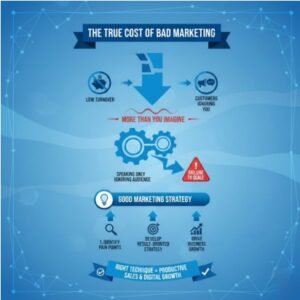
Bad marketing costs your business more than you can ever imagine or recognize, and this often appears mainly in low turnover or customers ignoring what you offer. If a business relies solely on speaking about the product or service it offers without trying to understand the audience and consumer behavior, this can make a business fail to scale up. That is why good marketing tips often begin with identifying the pain points of the customer and developing a result-oriented marketing strategy regarding them. Changing from bad marketing to a more effective approach can pave ways for emerging prospects, drive business growth, and produce stronger results.
Using the right marketing technique that is more productive and drives sales naturally is a necessity for all businesses that need to thrive digitally.
What Bad Marketing Really Looks Like (Bad Marketing Examples & Mistakes)
Bad marketing typically occurs when a business focuses mainly on pushing out messages that don’t match the audience, not even a bit. This is shown through marketing mistakes such as poor messaging, wrong targeting, and campaigns that don’t align with what people need. If your content doesn’t appeal to the real needs of the customer, it becomes difficult for it to sell; therefore, it becomes easier for customers to scroll past or disregard it.
Most marketers fall into the trap of feature-selling because they slip into product-focused marketing, believing that listing all the features of a product would amaze customers and make them buy even if they don’t wish to. But the reverse is the case; this results in weak copywriting that falls short of emotional connection. Thus, the information conveyed appears unclear and mostly leads to low conversions.
The Biggest Red Flags of Bad Marketing
Bad marketing slows down business progression and often leads to fewer conversions and a high bounce rate. This makes it necessary for every brand to identify itself and make quick amends.
Signs of bad marketing commonly include low conversion, high bounce rate, poor customer engagement, and unclear messages that feel unrelated. When your unique selling proposition is unclear, people find it difficult to understand why they should buy from you.
How Good Marketing Starts With the Customer (Good Marketing Principles)
Good marketing starts by identifying and managing user problems first. Rather than diving directly into all the features of your product and its benefits, you must first show that you understand the problems your audience faces. This approach establishes trust, given that people feel heard and understood, and that’s the basis of good marketing.
When you display awareness of what the customer has tried before and why those efforts didn’t turn out well, this reveals your empathy and insights into their path. That is why understanding customer experience and user dissatisfaction enables you to place your offering as an effective remedy, perfect for those facing the same challenge. This makes your message more understandable and convincing.
The Psychology Behind Good Marketing
Good marketing is often subject to marketing psychology by making use of user-centric messaging and sentimental advertising. When you speak directly to what people feel, their hopes and frustrations, it connects more with them, and they respond to this type. This emotional impact turns marketing from plain information into substantial persuasion. This is efficient because marketing becomes more result-driven when customers feel understood.
Breaking Down Bad vs Good Marketing (Side-by-Side Comparison)
Simply, a bad marketing strategy is centered on the product rather than the customer it is aimed at. It concentrates more on product features and usually turns out unproductive because it doesn’t tackle what the audience cares about. That’s the reason why feature marketing most times falls short, due to it not being linked with the buyer’s needs.
Breakdown of the Bad Marketing Formula
- Here’s my product: This happens when a business leads mainly with a product instead of the customer it is intended for, making the message sound self-focused.
- Here’s what it does: In this case, only the features of a product are mentioned, with no connection to the customer’s pain points.
- Here’s what’s so good about it: When praise is showered on a product without letting them know why it matters and how it solves their problems.
Good Marketing Formula
The good marketing formula centers around the customer before introducing the product as a remedy to their challenges. It is a benefit-driven messaging technique that speaks directly to problems and shows them they can fix their past frustrations. This customer-focused approach feels more human and more persuasive.
Breakdown of the Good Marketing Formula
- Here’s your problem: This is the first actionable formula good marketing follows. It starts by understanding consumer behavior and addressing their struggles.
- Here’s the benefit of solving it: This demonstrates the desired outcome they will get once their problems are tackled.
- Here’s why what you tried failed: Explain to them adequately why their past efforts failed to earn trust.
- Here’s my product: After these three steps, you then introduce the product naturally since you have identified their problems.
- Here’s what it does: This is when you display the important benefits and features of the product and how it aims at fixing the customer’s difficulties.
Why Bad Marketing Costs Your Business (The Real Impact)
Bad marketing makes a business goal unproductive and ineffective because customers are less likely to convert or take positive actions that would favor your brand.
Below are some of the real impacts that bad marketing costs your business:
- Financial and Visibility Losses: Bad marketing costs your business by making you spend a lot while not giving you the results you expect. It leads to lost investment and low brand credibility, and this can render a business invisible amidst competitors.
- Wasted Ads, Failed Campaigns, and Audience Disconnect: When a point conveyed doesn’t match user intent, ads often end up reaching the wrong people. This makes the ads ineffective and results in no achieved aim.
- Poor Customer Perception and Weak Brand Loyalty: Bad marketing portrays your brand in the wrong dimension, as it communicates your offers wrongly. When a customer finds it difficult to understand your message, they shift to a brand that is expressed clearly.
- Competitors Gain an Advantage Over You: When your marketing is weak, your competitors outshine you. Customers you lose become theirs. For example, if you go to buy a biscuit and a shop beside you doesn’t have it, you would go to the next shop selling the same. This is also applicable here.
- Slow Business Growth and Missed Opportunities: Gradually, bad marketing hinders growth because it attracts the wrong audience. This leads to lost opportunities, reduced sales, and obstacles in expanding your business.
Why Bad Marketing Costs Your Business (And Why Good Marketing Wins)
Bad marketing costs your business by weakening your brand message, targeting the wrong audience, and slowing down your business growth. But good marketing strategies win the game; they attract the right people, keep them interested, and convince them why they must choose your business first.
Good marketing uses customer-first marketing and the 80/20 rule, which is more 80%
customer-centric and 20% product marketing. Overall, good marketing fixes all the damages that bad marketing costs your business and is instrumental to long-term business growth.