
Google Ads vs Meta Ads: Which Platform Actually Drives Results for Your Business?
Introduction
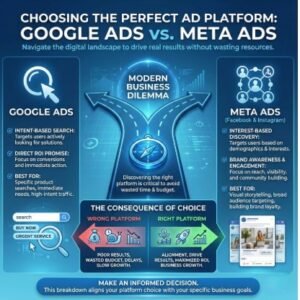
Choosing the perfect ad platform that actually drives results without spending a lot of money is one critical factor that most modern businesses face. This is sometimes because one has to discover the right platform that works very well for your brand and also identify those that don’t, to avoid wasting time and resources. Sometimes, this can be confusing because in online advertising, both Google Ads and Meta Ads promise great ROI.
Making this decision is very essential in the business world today because picking the wrong platform yields poor results, wasted budget, delays, and slows your business growth. This blog breaks down both platforms so that you know which one aligns with your business goals.
What Are Google Ads and How Do They Drive Results
Google Ads is an online advertising platform that helps businesses pay to show their ads to people searching for what they sell or offer. It is built based on search intent. For example, when someone searches for “best ice cream” or “best digital skills academy,” Google immediately displays ads related to that search.
Google Ads works like a billboard that displays only to those who are searching for what you sell. It drives results by combining three vital elements: buying intent, precise targeting, and measurable data. It goes beyond creating brand awareness, focusing instead on ready-to-buy customers and turning them into sales in a measurable way.
How Google Ads Benefits Businesses
Google Ads is extremely beneficial to businesses as it is built on search intent and targets users with specific needs, making them more likely to convert.
Below are some of the benefits of Google Ads to businesses:
- High-intent Traffic: Google Ads drives traffic by displaying ads to people based on what they search for online.
- Better-quality Leads: Google Ads attracts potential customers who are more likely to convert, either to buy, sign up, subscribe, or take the desired action.
- Measurable ROI: With the aid of Google Ads, you can track the financial return on what you spend on advertising. It enables you to see for yourself how much revenue your Ads generate.
How Google Ads Work for Different Business Goals
Google Ads serves different goals based on your business strategic objectives. Virtual stores utilize Google Ads to display products at the top of search results.
Here is how businesses use Google Ads in the real world:
- Lead Generation Campaign: Google Ads helps you get potential customers interested and generate leads easily.
- E-commerce Product Ads: Online businesses use Google Ads to showcase their products and services.
- Local Service-based Ads: Most brands harness Google Ads to target local customers in their locality.
- Brand Awareness Campaigns: Google Ads is used by most companies to increase visibility and enhance brand recognition.
- Remarketing Ads: With the aid of Google Ads, businesses can re-engage potential customers and enable them to take their desired action.
Understanding Meta Ads and Their Results for Businesses
Meta Ads include all online advertising done across all Meta platforms such as Facebook, Instagram, Threads, WhatsApp, among others. They depend highly on audience targeting, which relies on behaviors, interests, age, demographics, and past interactions. It differs from Google Ads in the sense that it isn’t based on search intent but on creative and high-quality visual content and storytelling. This is why it attracts people who aren’t searching but are persuaded. This makes it impactful and powerful for social media advertising, aiming at reaching a wide audience.
Benefits of Meta Ads for Businesses
Meta Ads dominate in engagement and also excel in fostering brand visibility. Through quality photos, videos, stories, and reels, brands are able to strengthen digital awareness and connect profoundly with their audience.
Here are some benefits of Meta Ads for businesses:
- Engagement
- Brand awareness
- Strong visual storytelling
- Retargeting capabilities
- Precise Audience Targeting
This is why many brands go for Meta Ads, as they stimulate significant audience interactions through likes, comments, shares, and saves. This can build long-lasting trust and relationships.
When to Use Google Ads vs When to Use Meta Ads
Google Ads is suitable for brands aiming for customers who are prepared to take action immediately and is mainly used by service providers, e-commerce brands, and local businesses. In contrast, Meta Ads works perfectly well for businesses that want quick visibility, engagement, or storytelling to connect and interact with their audiences emotionally.
Although some businesses leverage both platforms for all-around performance, integrating both tools can boost your business progress and lead to more revenue generation.
“The best results come when your strategy meets the right platform at the right time.”
Tips to Maximize Results on Both Platforms
Both Google Ads and Meta Ads drive results that can accelerate business growth within a given period.
Below are 3 powerful tips to maximize results on both Google Ads and Meta Ads:
- Set Clear Goals and Align Each Platform to Its Strengths: Set clear goals and objectives you want Google and Meta to accomplish. Google works best for purposeful actions like making purchases, subscribing to a service, or signing up, while Meta Ads perform best at creating awareness and engagement.
- Use Smart Targeting, Creatives, and Testing for Better Performance: Both platforms need the right audience targeting and continuous A/B testing to reduce cost, drive traffic, and improve conversion.
- Track Results Properly and Adjust Budgets Based on What Works: Configure Meta Pixel and Google Tag Manager to help monitor and track actions throughout your website.
Google and Meta Ads work differently based on the aim of your brand or business. If you aim for high sales and traffic, Google Ads is more suitable, but if your goal is awareness and engagement, Meta Ads is the perfect match. Incorporating both can provide a great advantage to your brand. Therefore, before choosing the right platform, first identify your brand’s goals.
Ready to see which ad platform drives results for your business? Start experimenting with Google and Meta Ads today!