
How SEO That Adapts to Smarter Search Behaviour and AI-Driven Tools Will Lead the 2026 Digital Landscape
Introduction
SEO is metamorphosing into a new phase where artificial intelligence and smarter search behavior are redefining user preferences. This has greatly impacted AI search engines, SEO, and optimized searches, which influence online visibility.
SEO that adjusts to smarter search behavior and AI-driven tools is becoming vital for all online marketers even in 2026. This makes it necessary for businesses to align with human search intent and AI-driven systems in order to thrive in the digital world.
Understanding Smarter Search Behaviour Trends in 2026
Nowadays, users no longer search short keywords but have shifted their preferences to specified long-tail keywords, which include local and voice queries. This shift has pushed search optimization tactics toward natural language. Modern user behavior has transformed the digital space by simplifying mechanized SEO outreach and global awareness.
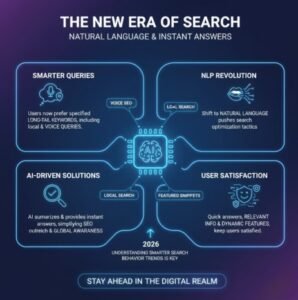
Following the growing increase of instant search engine result page answers, where AI has become a center of attraction by summarizing and providing solutions globally, users now get quick answers, relevant info, and dynamic features that keep them satisfied. AI-driven tools play a vital role in making difficult tasks easy. Therefore, understanding smarter search behavior trends in 2026 is a major key to staying ahead in the digital realm.
Multi-modal Search and Its Impact on Visual SEO
Multi-modal search is now prevalent, as people search using a mixture of text, images, and voice. Rather than typing lengthy texts, users can upload pictures or use voice commands to search online.
Recently, people can upload images on AI-oriented and automated machines that use optical character recognition to replicate typewritten words in images. This means that websites must pay attention to how images appear online.
For SEO, this trend creates a new demand for clear, high-quality visuals with proper descriptions. Search engines rely on ALT text, captions, and formatted data to understand what an image represents. If these details are absent, the content may not appear in multi-modal search results.
How Voice Search Is Transforming User Intent Optimization
Voice search is altering the way people look for information online because it allows them to give vocal commands instead of typing. When people use voice search, their questions usually sound more conversational. This implies that search engines now concentrate on understanding the purpose behind what the user is saying, not just the keywords.
This change requires content that aligns with the natural way of speaking. Pages that answer questions clearly, use conversational language, and provide straightforward explanations are most likely to perform well in voice search results. In 2026, optimizing for humans will be the gateway to staying visible online.
The Rise of AI-Driven Tools in Modern SEO Strategies
AI has played an essential role in modern SEO because search engines now use automated learning to analyze search intent and provide more reliable results. AI tools like GPT, Gemini, Jasper, and Perplexity help break down complex tasks with ease. AI-driven tools in modern SEO make work more efficient and relevant in the following ways:
- Improving content analysis and ranking signals
- Helping marketers see trends daily
- Enhancing user intent understanding
- Automating keyword and topic research
- Optimizing visuals and voice search for multi-modal results
Practical Ways Businesses Can Adapt SEO to AI and Smarter User Behaviour
Businesses must create quality content that suits user intent to gain significant organic local and global visibility instead of chasing keywords. Improving page experience, adding structured data, optimizing visuals, and using conversational content formats will lead to higher ranking and better site performance.
Here are five practical ways businesses can adapt SEO to AI and smarter user behavior:
- Optimize for voice search: People now search with full sentences, so using long-tail keywords, FAQs, and answering questions clearly helps capture voice search and Google’s featured snippets.
- Leverage AI-enhanced content: AI assists in spotting trends and content gaps, so use it to create commercial intent content, develop targeted topics, and improve constantly based on data results.
- Amplify User Experience (UX): AI prefers engagement analytics to help improve web performance, mobile responsiveness, and site navigation, which boosts interaction.

- Adopt Semantic SEO: Google and other search engines focus more on context than single keywords, so create content clusters and make use of relevant phrases that satisfy varied search intent on one page.
- Use structured data and advanced snippets: AI reads structured content to deliver rich results. Include schema markup, optimize pages with visuals, and target SERP features.
SEO that adapts to smarter search behavior and AI-driven tools is the foundation of digital progression in 2026. Those who cannot leverage this trend will be left behind. Brands that embrace conversational intent, AI insights, and human-centered value will gain a competitive edge in the digital landscape.
Start early today to transition your brand with this trend. Use future-focused SEO strategies and AI-driven tools, and see how you scale up ahead of other brands in a short while.